
Relief from heavy, painful periods — Cerene now available here
An in-office, minimally invasive treatment for heavy periods and menstrual pain
Many women suffer in silence from heavy periods (HMB) and debilitating cramps (dysmenorrhea). We now offer Cerene® Cryotherapy, a safe and well-tolerated option you can receive here in our office. It’s designed to reduce bleeding and menstrual pain — often with minimal downtime.
What Are Heavy Periods & Painful Cramps?
What is Heavy Menstrual Bleeding (HMB)?
- Also called menorrhagia: heavy or prolonged menstrual bleeding that interferes with your quality of life
- Signs may include:
• Bleeding for more than 7 days
• Soaking through a pad or tampon every hour (or more)
• Needing to change protection overnight
• Passing large blood clots
• Anemia, fatigue, or low iron from chronic blood loss - HMB affects ~1 in 5 women and often leads to disruptions in daily life (work, social, emotional) Cerene+2Cerene+2
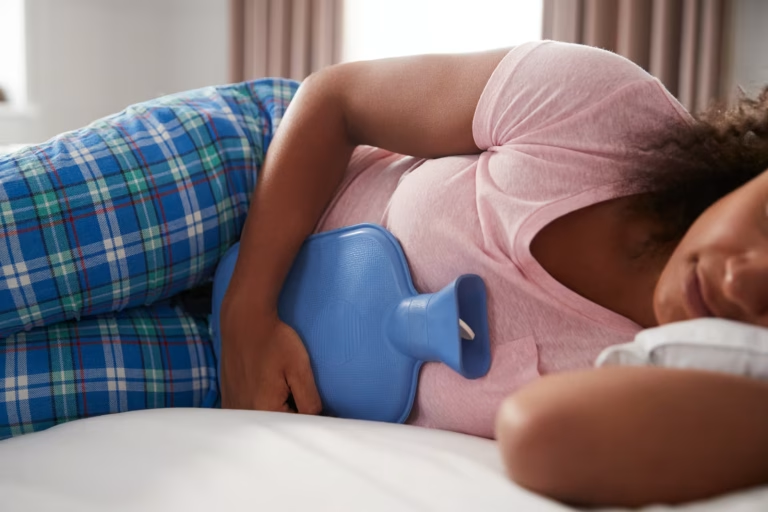
What is Dysmenorrhea? (Menstrual Pain / Cramps)
- Painful uterine cramping associated with menstruation
- Often occurs together with heavy bleeding
- Can significantly affect physical and mental health, cause absenteeism, and reduce productivity Cerene+1
- In clinical data, 86% of patients treated with Cerene reported a reduction in dysmenorrhea one year after procedure Cerene+2Cerene+2
Why It Matters
Heavy bleeding and cramping shouldn’t just be “something you live with.” When left untreated, HMB can lead to anemia, fatigue, depletion of iron stores, and interfere with everyday life. Cerene+2Contemporary OB/GYN+2
What Is Cerene & How Does It Work?
Description
- Cerene® is an FDA-approved endometrial cryotherapy (cryoablation) device for treating HMB due to benign causes in premenopausal women who have completed childbearing. Cerene+4FDA Access Data+4Cerene+4
- The procedure uses cooling (cryotherapy) to treat the uterine lining (endometrium) in ~2.5 minutes, while also providing a natural numbing effect, reducing the need for general anesthesia or deep sedation. Cerene+5Cerene+5Cerene+5
- Because cryotherapy has a different healing response compared to heat methods, Cerene tends to produce fewer intrauterine adhesions (scar tissue) and preserves access to the uterine cavity, which can be important for future evaluations. Cerene+2Cerene+2
Procedure Steps (simplified for patients)
- The Cerene device is inserted gently into the uterus
- Safety checks are performed and the cryotherapy is delivered (~2.5 minutes)
- The device is removed, and the uterine cavity begins healing
Total procedural duration (device insertion to removal) is ~7 minutes including setup steps. Cerene+3Cerene+3Cerene+3
Pain & Comfort
- During treatment, 92% of patients report pain at or below the acceptable median pain level. Cerene+3Cerene+3Cerene+3
- The median pain score during the treatment is about 2 out of 10. Cerene+3Cerene+3Cerene+3
- On day one after treatment, the median pain score is 0 out of 10. Cerene+1
- Most patients can return to normal activities within 24 hours. Cerene+3Cerene+3Cerene+3

Benefits & Outcomes Patients Can Expect
What Are the Benefits & Results?
- Bleeding reduction: In clinical studies, ~90% of patients reported having normal, light, or no periods at 12 months after Cerene. InnovaHealth Partners+3Cerene+3Cerene+3
- Cramps relief: 86% of patients saw a reduction in dysmenorrhea at one year. Cerene+2Cerene+2
- High satisfaction: ~90% report little to no limitations in daily life, ~90% are satisfied with treatment, ~95% would recommend Cerene to friends/family. Cerene+3Cerene+3Cerene+3
- Longer-term durability: In the pivotal CLARITY trial, results remained stable to 36 months: ~88.6% of patients maintained improved bleeding outcomes, and satisfaction remained high. InnovaHealth Partners+2Cerene+2
- Low need for further surgery: Over 3 years, only ~3% of patients required hysterectomy for HMB. Cerene+3Cerene+3InnovaHealth Partners+3
- Preserved uterine cavity access: Minimal adhesions allow for future diagnostic evaluations if needed. Cerene+2Cerene+2

What to Expect Before, During & After
What to Expect with Cerene Treatment
Before the Procedure
- Ideal patients: those who have tried medical therapy without adequate relief, those who cannot tolerate hormonal therapy, and those who no longer desire future fertility. Cerene+3Cerene+3Cerene+3
- It’s important to set realistic expectations: the goal is normalization or reduction of bleeding and cramping, not necessarily complete elimination of menstruation (amenorrhea is not guaranteed). Cerene+2Cerene+2
- On procedure day: wear comfortable clothing, eat normally, discuss if someone should accompany you (depending on your pain/pain management plan) Cerene
During the Procedure
- After cervical preparation and length measurement, the device is inserted, safety checks done, and cryotherapy delivered for ~2.5 minutes. Cerene+1
- Cryotherapy itself helps numb local nerves (a sort of natural analgesic effect). Cerene+2Cerene+2
- The entire device insertion-to-removal sequence is about 7 minutes. Cerene
After the Procedure
- Most patients are discharged shortly after (if done in-office without sedation) and can resume normal activities within ~24 hours. Cerene+3Cerene+3Cerene+3
- Expect watery or bloody vaginal discharge for up to 2-4 weeks while the uterus heals. Cerene+1
- Improvements in bleeding and cramping are usually seen within 3-6 months. Cerene+3Cerene+3Cerene+3
- Long-term contraception must continue until menopause (pregnancy after ablation is risky). Cerene+3Cerene+3FDA Access Data+3
- Some side effects (temporary) include uterine cramping, vaginal infection, or lightheadedness. Cerene+2FDA Access Data+2
- Contact your provider immediately if you experience worrisome symptoms: heavy bleeding, fever, foul-smelling discharge, severe pain. Cerene+1

Am I a Candidate?
Is Cerene Right for You?
Good candidates typically:
- Are premenopausal women with heavy menstrual bleeding (HMB) due to benign causes
- Have completed childbearing and do not wish to preserve fertility
- Have tried medical or hormonal therapies (or cannot tolerate them)
- Have a normal uterine anatomy (no large submucosal fibroids, no uterine abnormalities that would impede treatment)
- Do not have active genital, urinary, or pelvic infection; no IUD in place; no known or suspected uterine cancer or endometrial hyperplasia Cerene+3FDA Access Data+3Cerene+3
Patients for whom Cerene is contraindicated include those who:
- Are pregnant or wish to become pregnant
- Have uterine cancer or suspected malignancy
- Have an active pelvic infection
- Have an IUD in place
- Have had prior endometrial ablation or uterine surgery that weakens the wall FDA Access Data+2Cerene+2

Why Choose Cerene (vs Other Options)
Why Offer / Choose Cerene?
- Office-based, no capital equipment needed: Because Cerene is self-contained and does not require large capital devices, it can be integrated into your practice setting. Cerene+2Cerene+2
- No general anesthesia required: The natural numbing effect of cryotherapy often obviates the need for heavy sedation. Cerene+3Cerene+3Cerene+3
- Comfort & tolerability: Low median pain scores, high satisfaction rates, minimal downtime Cerene+4Cerene+4Cerene+4
- Preserves uterine access: Lower rates of adhesion formation compared to other ablation methods, allowing future diagnostic evaluation (if needed) Cerene+2Cerene+2
- Durable outcome data: Long-term studies (36 months) show consistency in effectiveness and safety, low subsequent surgical intervention rates (~3% hysterectomy) InnovaHealth Partners+2Contemporary OB/GYN+2
Call to Action & Patient Invitation
Ready to Learn More?
- Ask your provider whether Cerene could be a good option for you
- Schedule a consultation to discuss your menstrual symptoms and options
- Visit our [“Women’s Health / Gynecology / Procedures” page] (or link) to read more, watch videos, or download FAQs
- Share with others — cerene.com offers patient stories, FAQs, and educational resources Cerene+3Cerene+3Cerene+3
Example invitation blurb
We are proud to offer Cerene® Cryotherapy as part of our suite of menstrual health options. If heavy bleeding or painful periods are interfering with your life, you don’t have to live with it. Contact us to see if Cerene might be right for you.

Safety & Disclaimers (Mandatory / Legal)
You will want to include a “Safety & Risk Information” or “Important Information” section (often as a footer or linked) that includes language along these lines:
Important Safety and Risk Information
Cerene® Cryotherapy Device is indicated to ablate the endometrial lining of the uterus in premenopausal women with heavy menstrual bleeding due to benign causes, for whom childbearing is complete. Pregnancy after the Cerene procedure can be dangerous; contraception must be used until menopause. Cerene is not for women with known or suspected uterine cancer or endometrial hyperplasia, active pelvic or genital infection, or an intrauterine device (IUD) in place. Temporary side effects may include uterine cramping, vaginal infection, lightheadedness, or vaginal discharge. Serious complications and procedural risks are possible. This treatment should only be offered by physicians trained in the safe use of the Cerene device.
(You may refer to the Cerene instructions for use, IFU, or safety labeling for full details.)